Fractal Symmetry, Butterflies and Switches
Here comes a longer storyline as I want to share the path that lead me to this conclusion. It involves butterflies…
I suspect we may be able to use this to turn off CRISPR
Base repeats
I have been playing around with CU and GA repeat sequence that I have seen turn up very frequently in switch elements and designs. To some degree also CA and GU - while I think the former are the best. But perhaps even switches need a little variation despite they seem so fond of repeat sequence. 
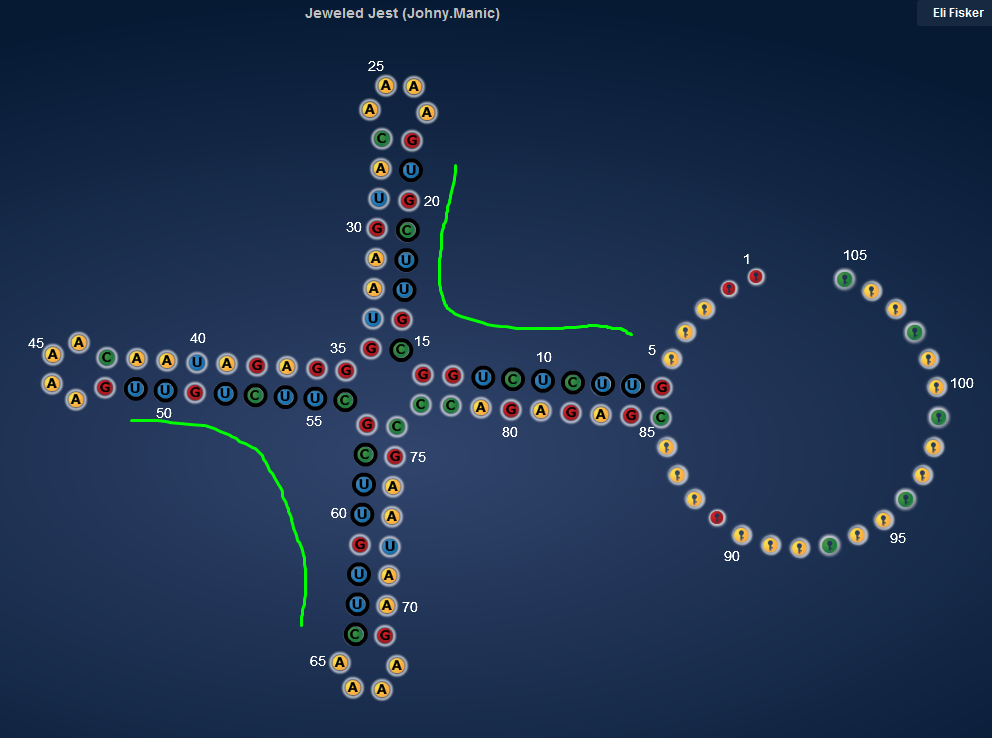
I have been playing with 3-ways and 4-ways as a means to get my favorite switch repeat base sequence into lab solves.
http://www.eternagame.org/game/browse/8038691/?filter1_arg2=8076998&filter1_arg1=8076998&filter1=Id
I have also been playing with complementary sequences that repeat but have less base bias.
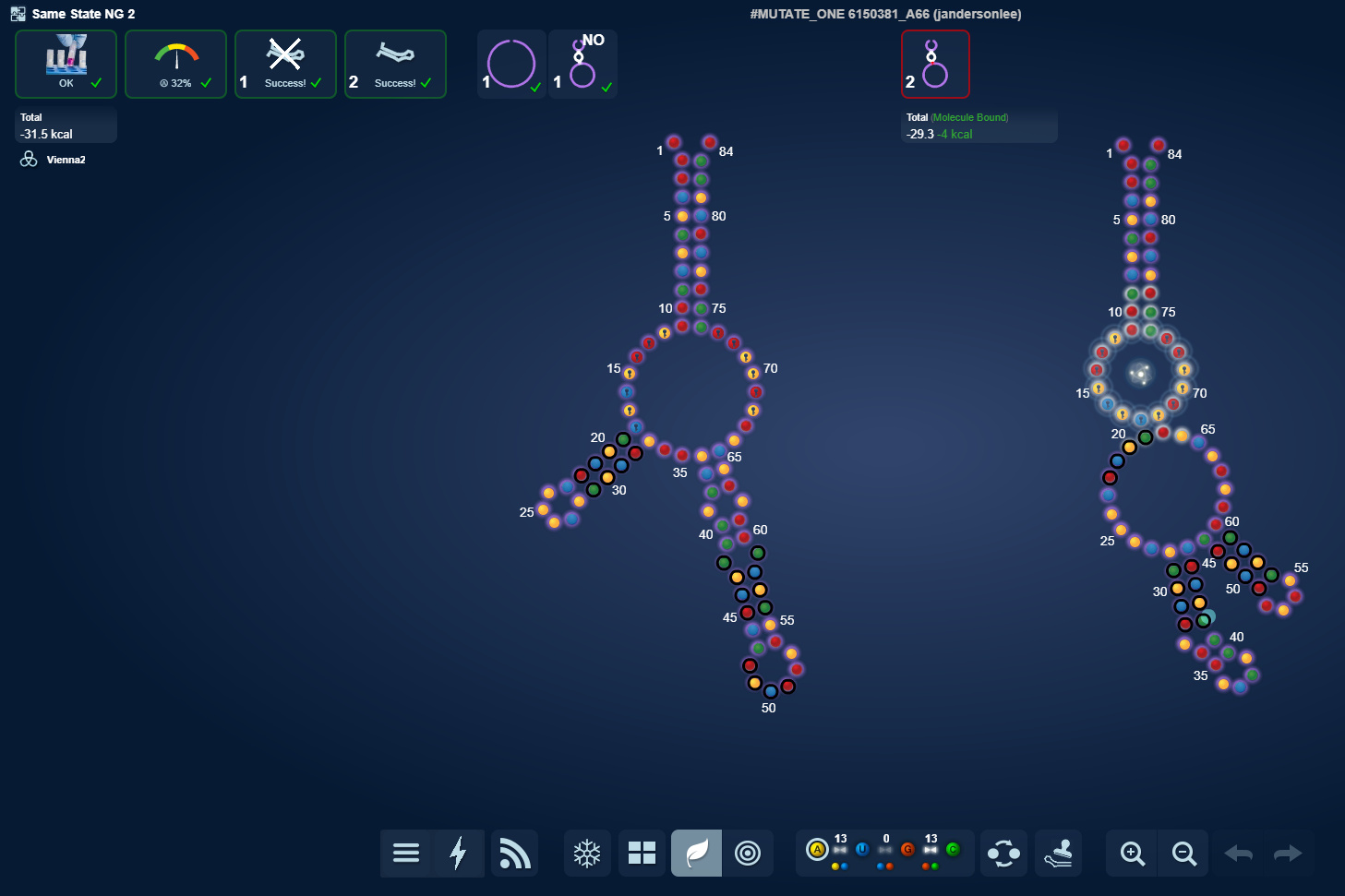
I was trying to double the blueprint of jandersonlee’s gliding switch. But there were not enough space for it with two MS2’s. I ended making as big as one as I could without the extra MS2 that I wanted in.
http://www.eternagame.org/game/browse/8038691/?filter1_arg2=8354472&filter1_arg1=8354472&filter1=Id
Original - CAUG repeats - Single aptamer design type with best fold change
http://www.eternagame.org/game/browse/6369196/?filter1_arg2=6446447&filter1_arg1=6446447&filter1=Id
If you stick in an alternative MS2, then these repeats should get updated to match the bases at the marked position in the MS2.
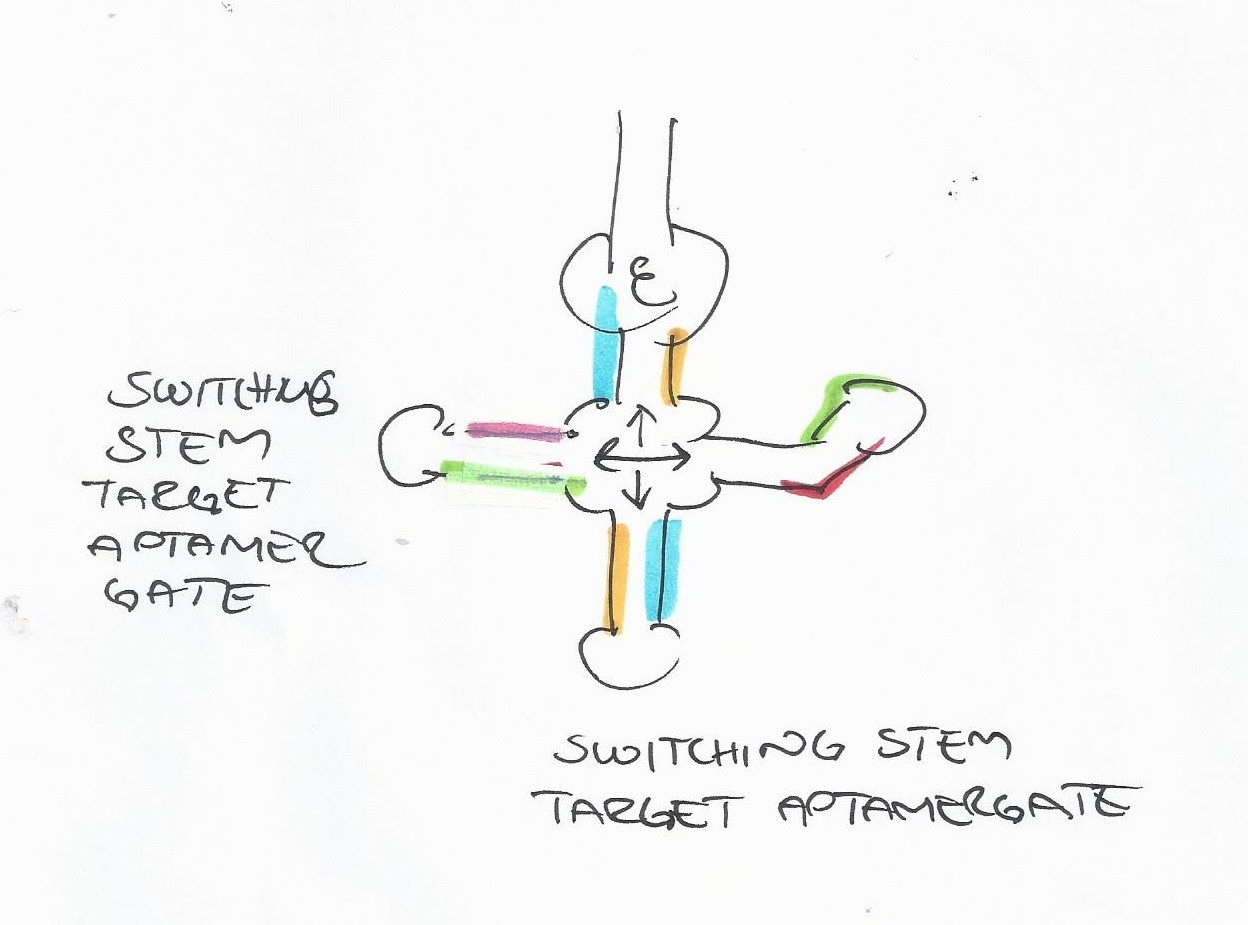
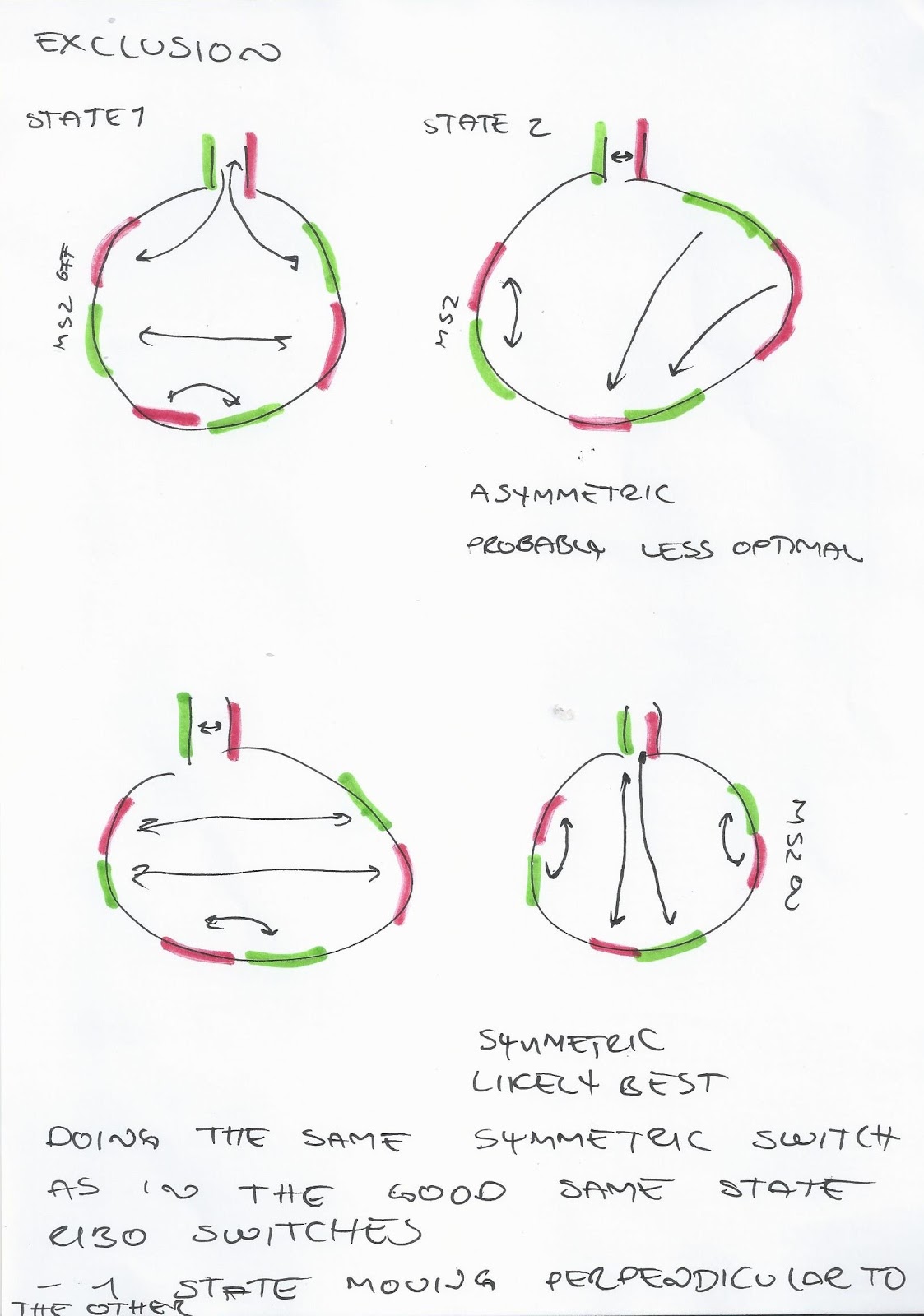
Since there wasn’t space for me to double the blueprint of the above design, I did the second best. I added an extra switching hairpin. I started to play around with one MS2 hairpin and 2 switching hairpin stems + a neck of identical sequence as the bottom of the MS2. In other words, two times two switching hairpins. Those will have a lot of combo options. They can match up all 4. One could also make two different sets of switching stems. (Illustration of the later below)
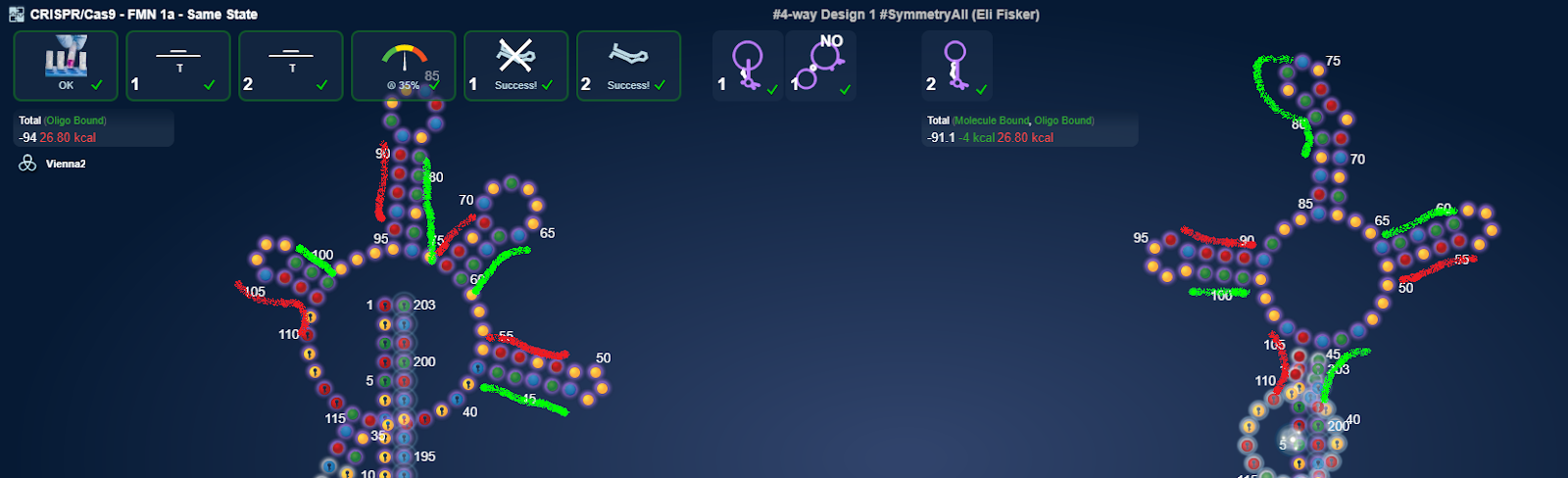
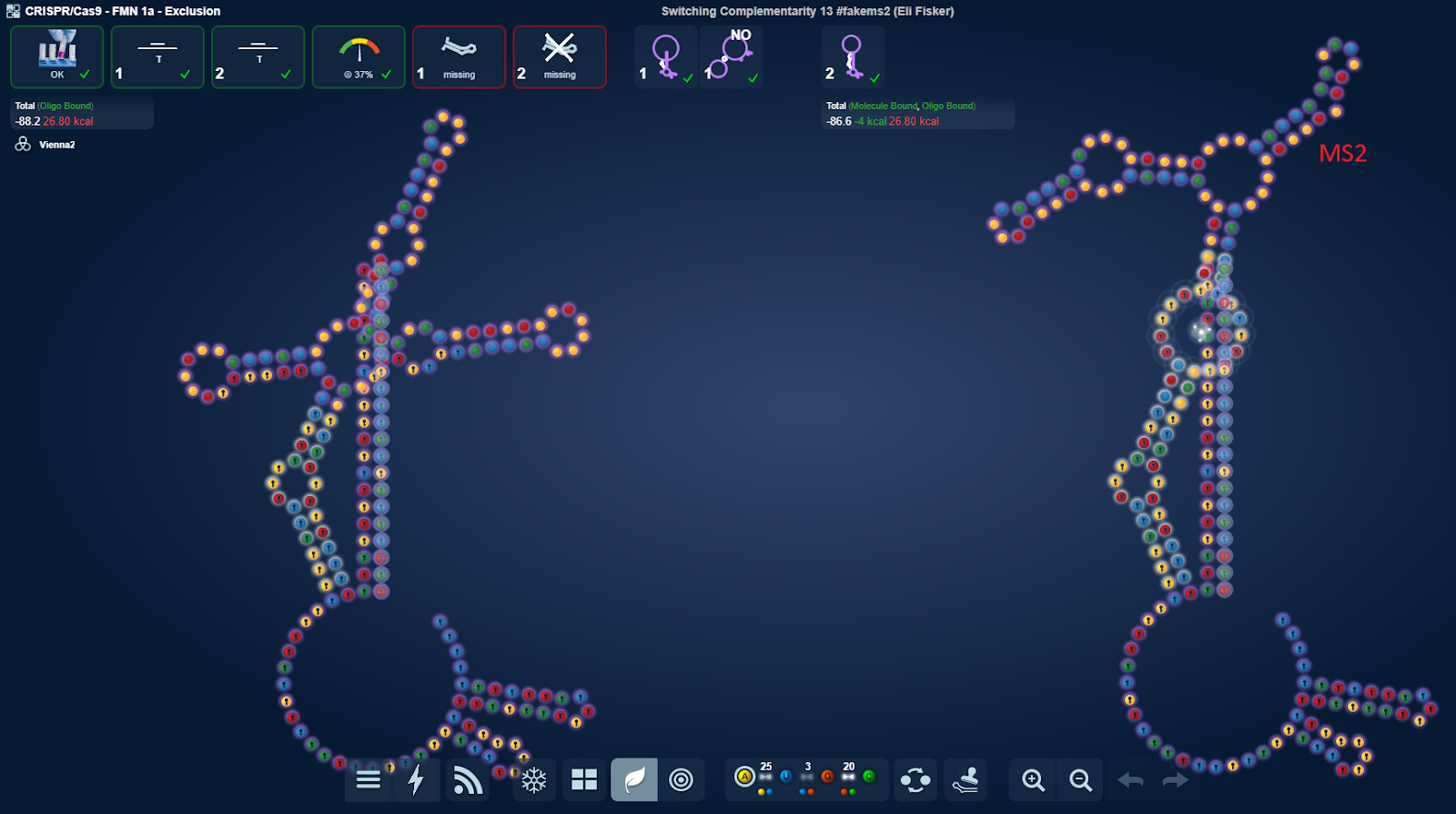
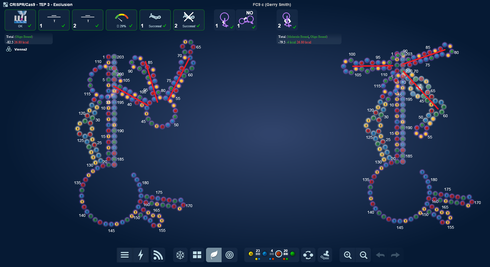
I played with the 4 switching stems of the same kind interacting with each other in both Exclusion and Same State labs. Here is one with extreme sequence bias. I tampered with the alternative MS2 too, to make it even more extreme. This is pure CU and GA repeats.
http://www.eternagame.org/game/browse/8047736/?filter1_arg2=8369568&filter1_arg1=8369568&filter1=Id
I drew up a few magnet blueprints. The top one is based on the design above. Notice this solve style allowed me to move the MS2, from being right after the aptamer.
The bottom one is based on the design below.
It kind of ending up as a switching cross. Just folded inward.
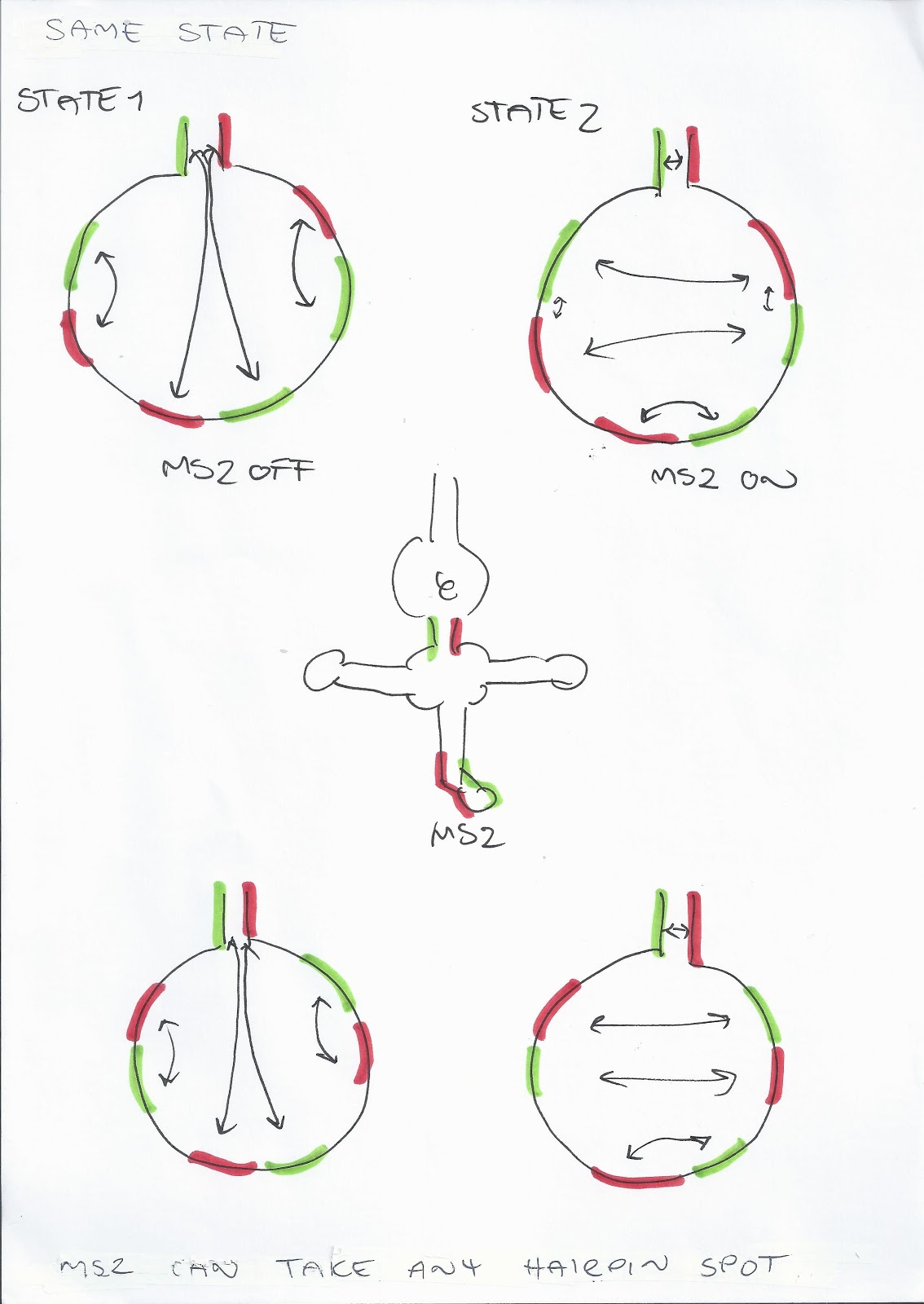
I did a similar experiment in Same State designs.
I realized that it didn’t really matter at which of the 3 hairpin positions I put MS2 at. I could solve it nonetheless. What I wonder is what lab will think. Will it prefer the usual middle one as I expect or will it be possible solving it with the one of the side MS2’s?
Double coaxial stacking
Omei’s talk about coaxial stacking in ON state, made me realize that I will probably not gotten enough bang for my buck in those of my experiments where I placed two coaxial stacks next either MS2 or the aptamer gate. Because adjacent stems only coaxial stack two and two. 3 stems make no double coaxial stacking pair.
Even more. It is not just even length stems and repeat sequence that are the cause of symmetry in switches. Coaxial stacking is causing it too. As coaxial stems are symmetric by nature.
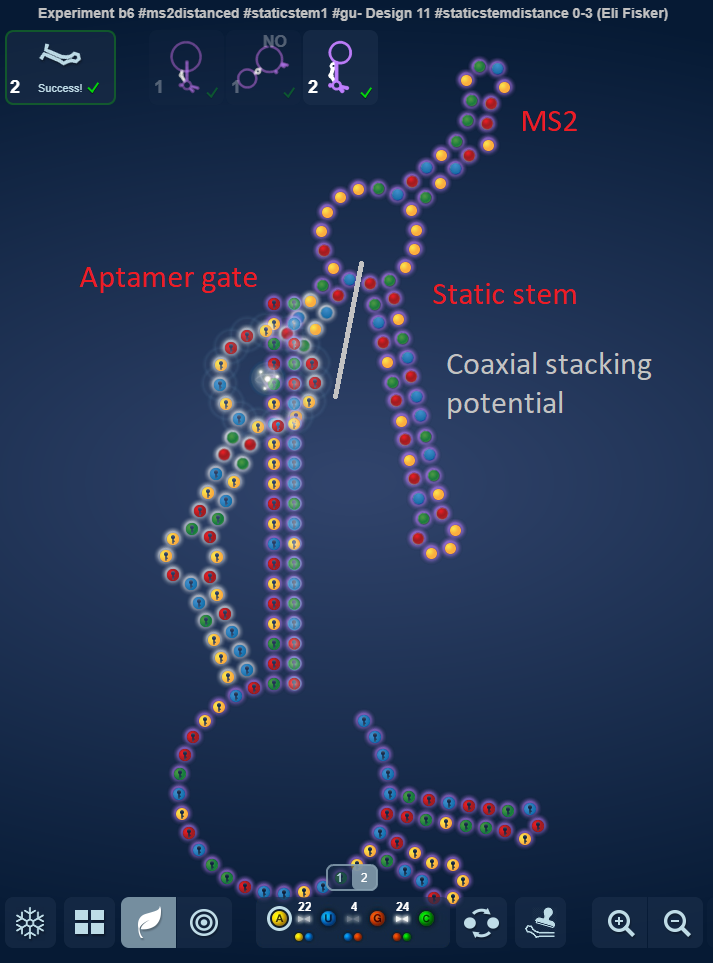
So I decided to take one of my experiment designs, and split the static stem in two static stems and move the one part so both of them would be doing coaxial to a stem in the ON state. One at the aptamer gate and one next to the MS2.
http://www.eternagame.org/game/browse/8038692/?filter1_arg2=8202196&filter1_arg1=8202196&filter1=Id
Double coaxial stacking potential
http://www.eternagame.org/game/browse/8038692/?filter1_arg2=8368940&filter1_arg1=8368940&filter1=Id
Structurally this looks remarkable like Brourd/Nando’s TB OFF switch solve. Except that this is an ON switch and the MS2 is not split between two stems.
http://www.eternagame.org/game/solution/7113332/7235632/copyandview/
I decided I would throw in complementary switching stems for the coaxial stems, just as in jandersonlee’s gliding switch.
Here is the result. Now the stems are no longer static. The whole switch bubble is changing structure between states.
It is doing a similar movement as I have long liked riboswitches to do. Albeit this one is a bit skewed.
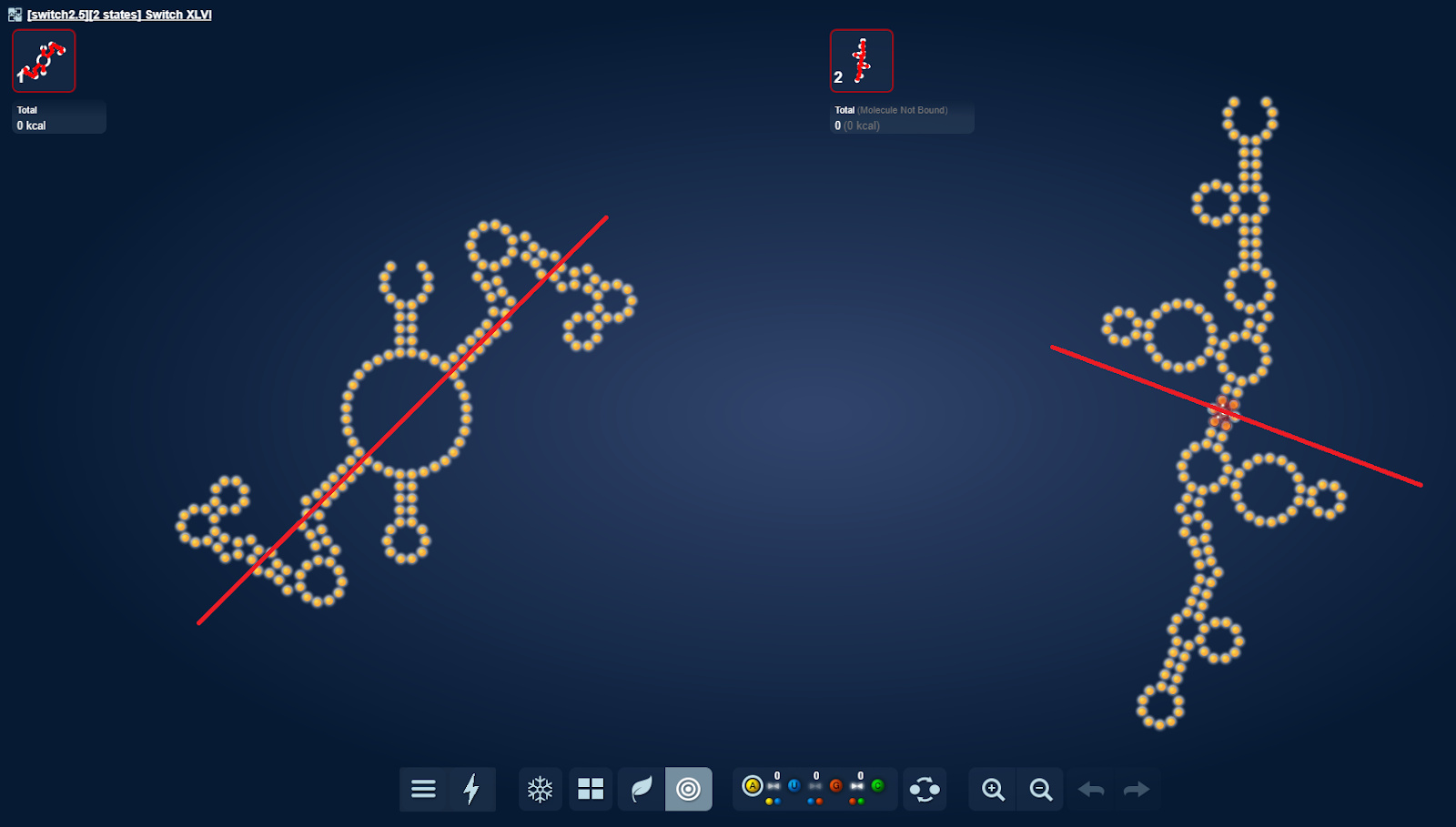
Have state 1 fold perpendicular to state 2
Generally Past example from good riboswitch lab. Good switches generally like to fold with symmetry to them.
This was also why I could fit this switch onto a fortune teller game.
Image borrowed from Blueprint of FMN/MS2 riboswitch
CRISPR Butterfly and the OFF switch
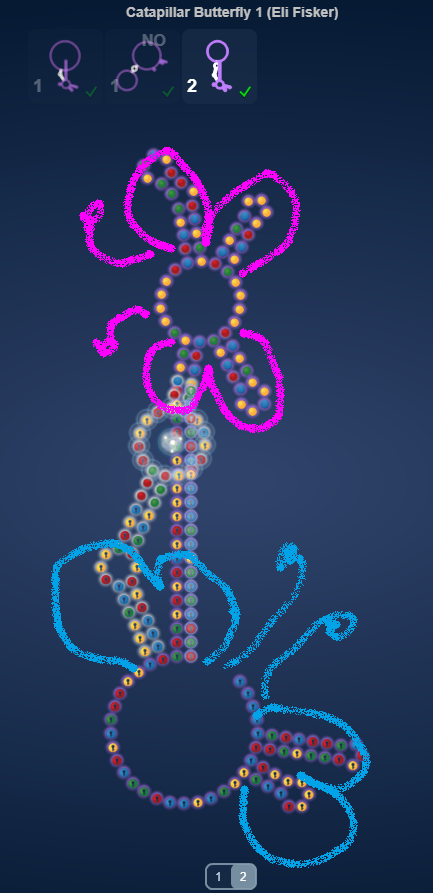
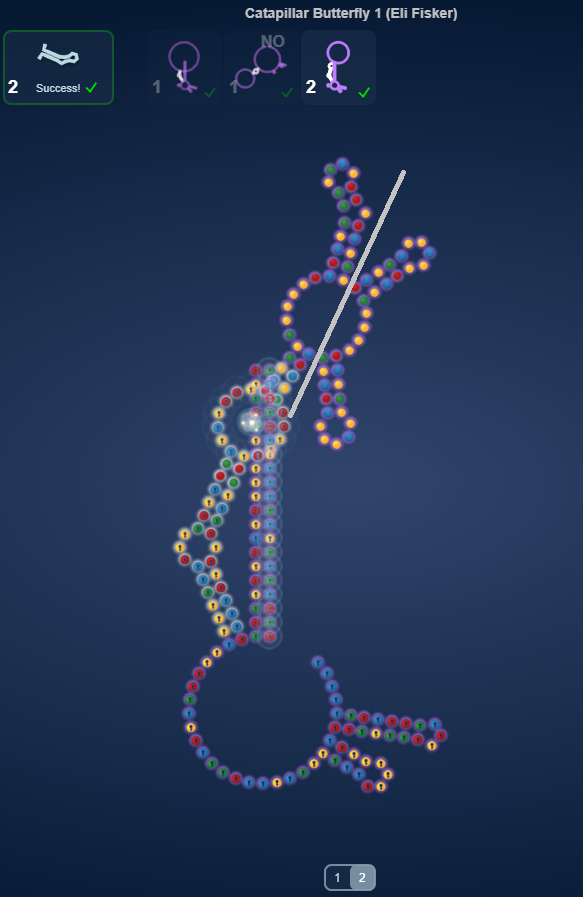
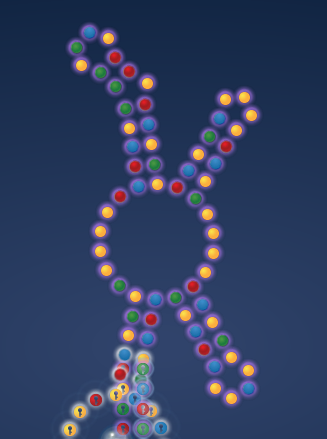
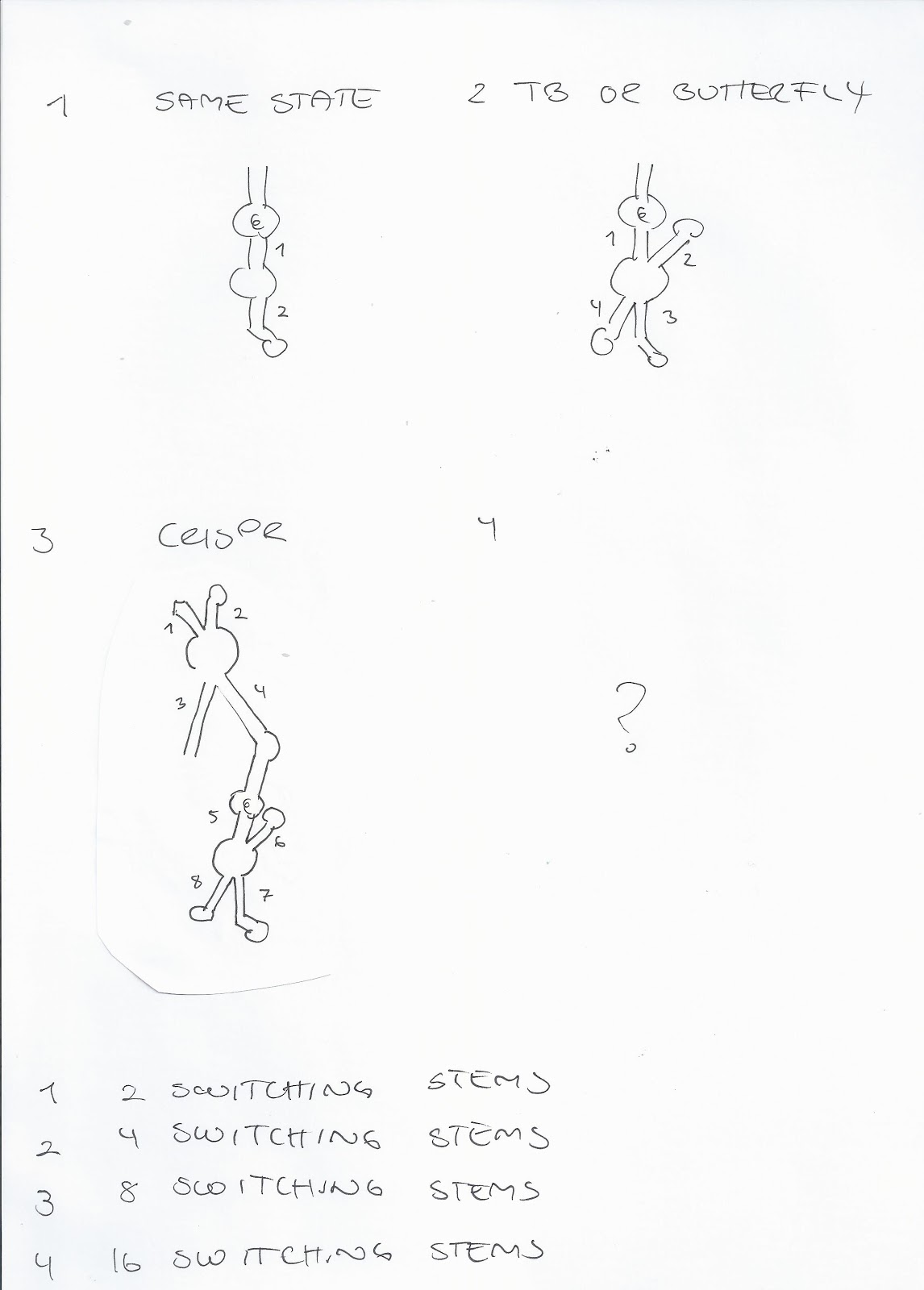
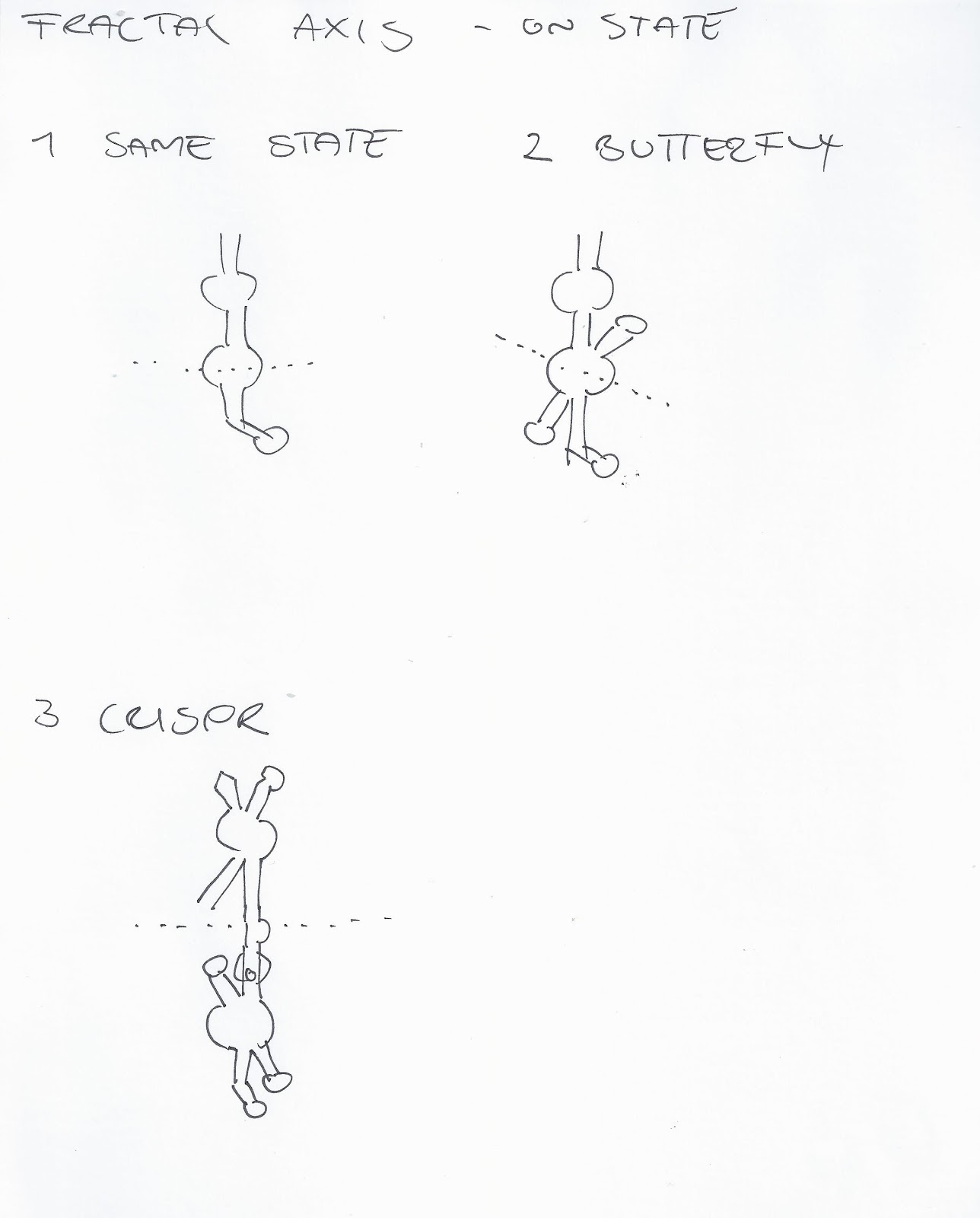
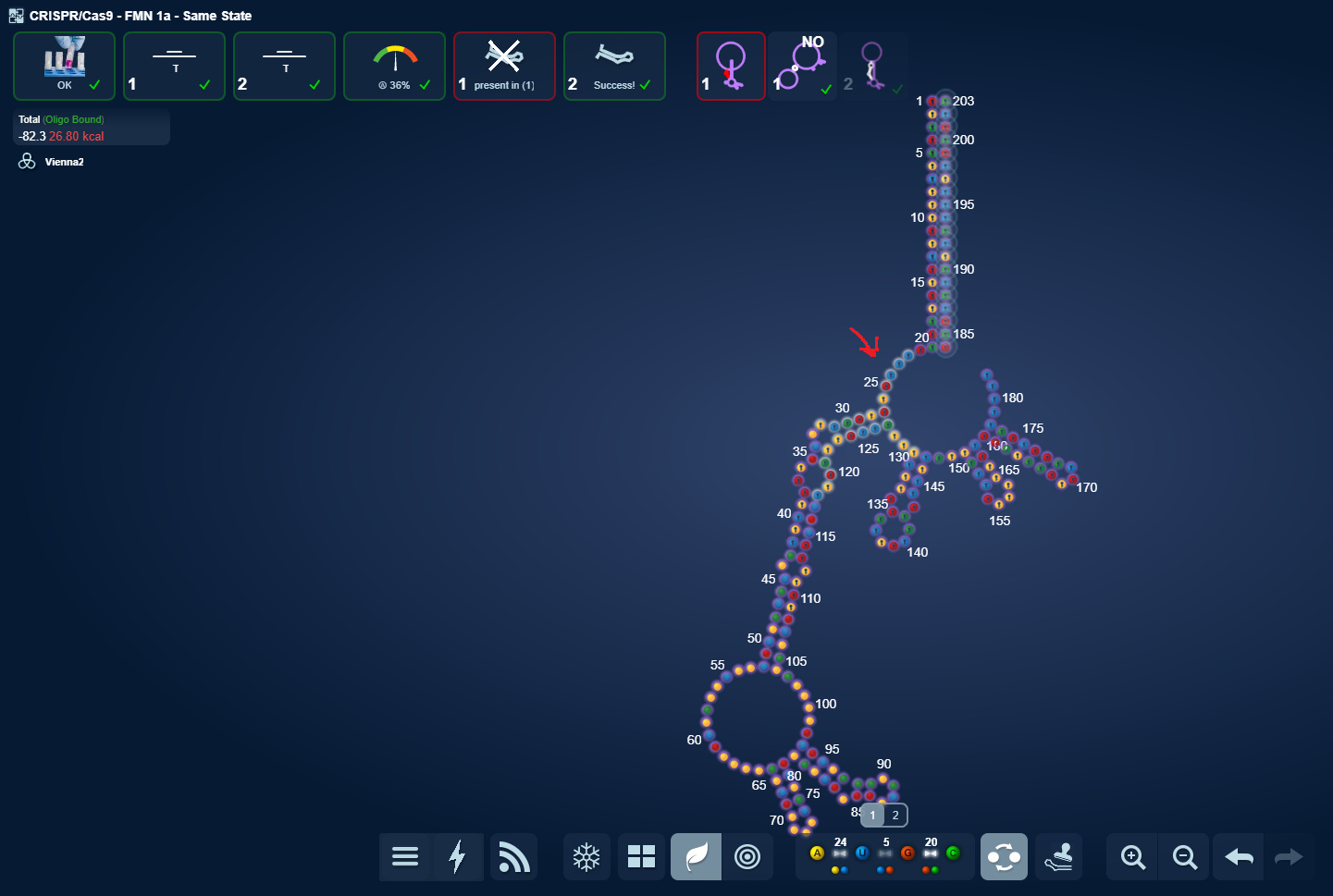
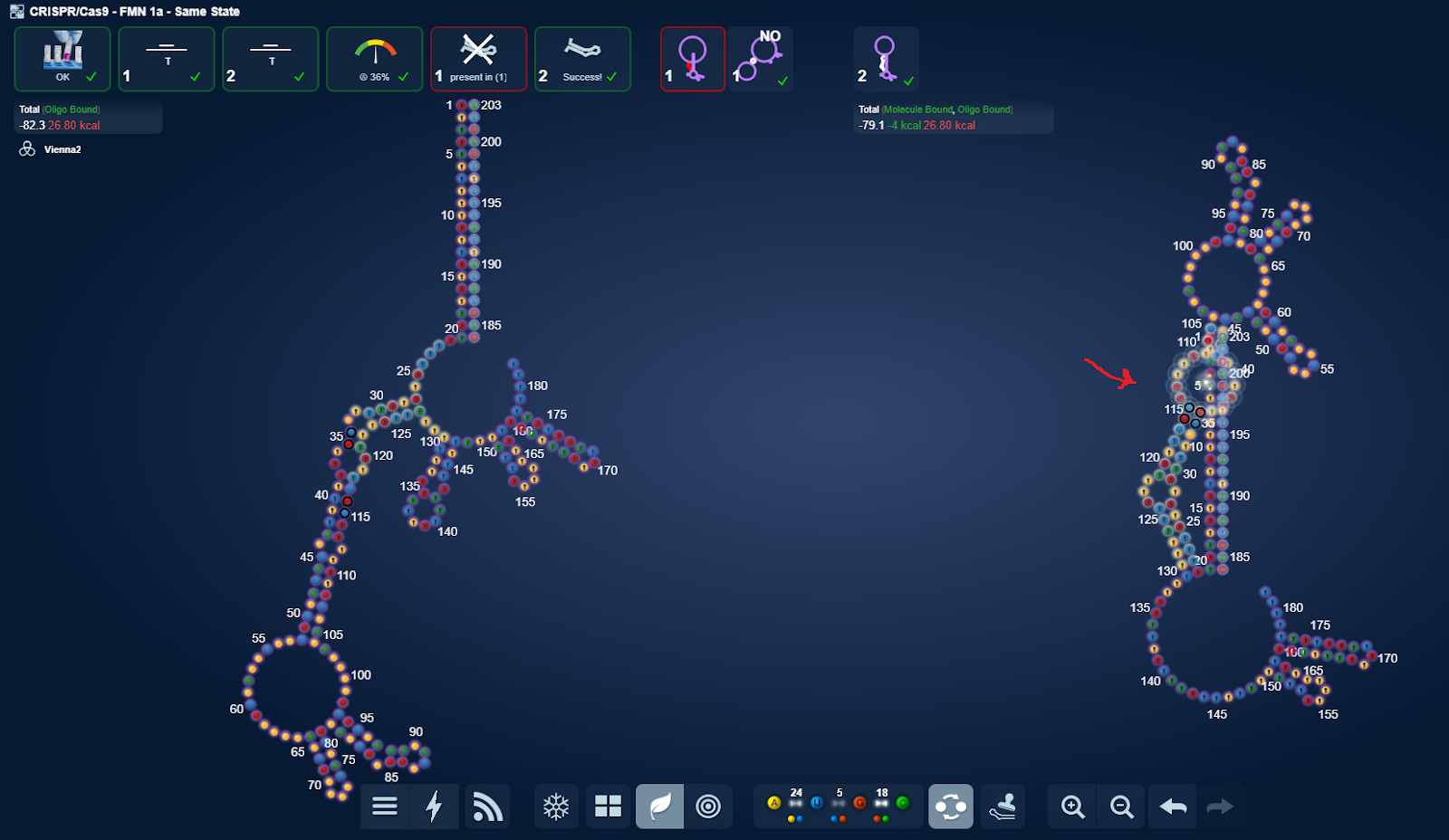
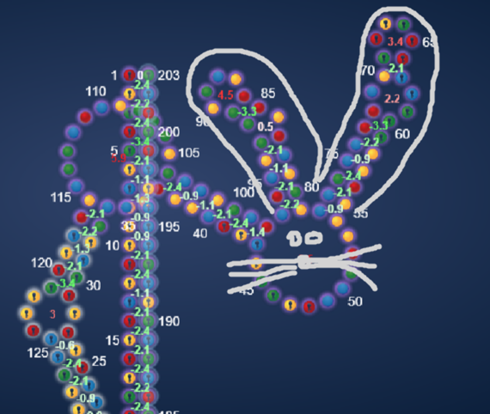
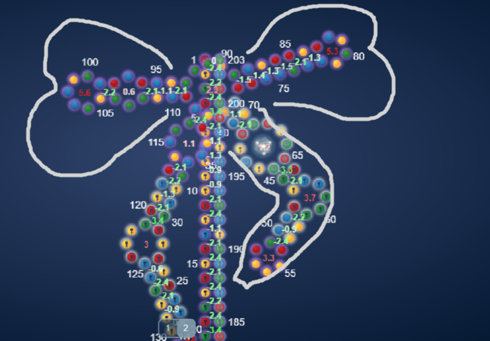
Now the CRISP part of the puzzle itself carries almost a butterfly pattern. Albeit an open ended one. I find this immensely interesting.
Which opens up for an old story. Boy and girl want to meet. Things happens. In this case preferably an OFF switch button for CRISPR.
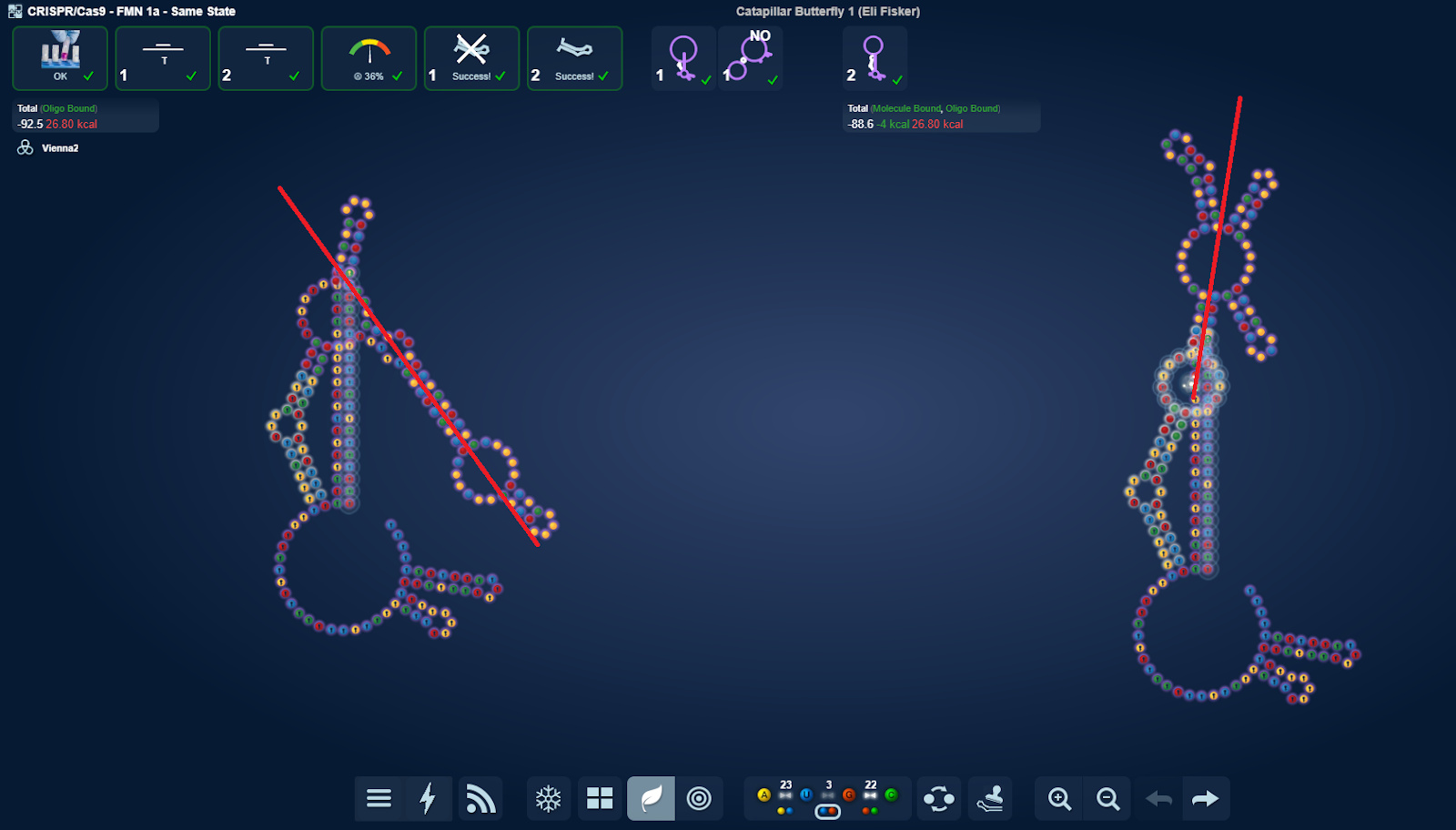
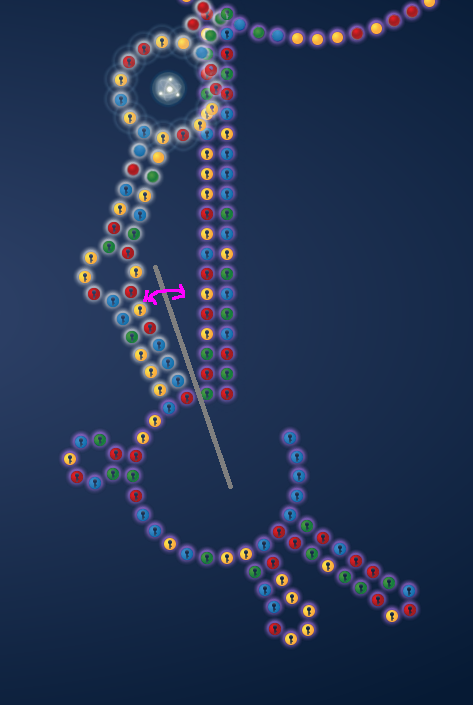
I believe a fold over the middle (horizontally) will do wonders for a DNA guide kickoff.
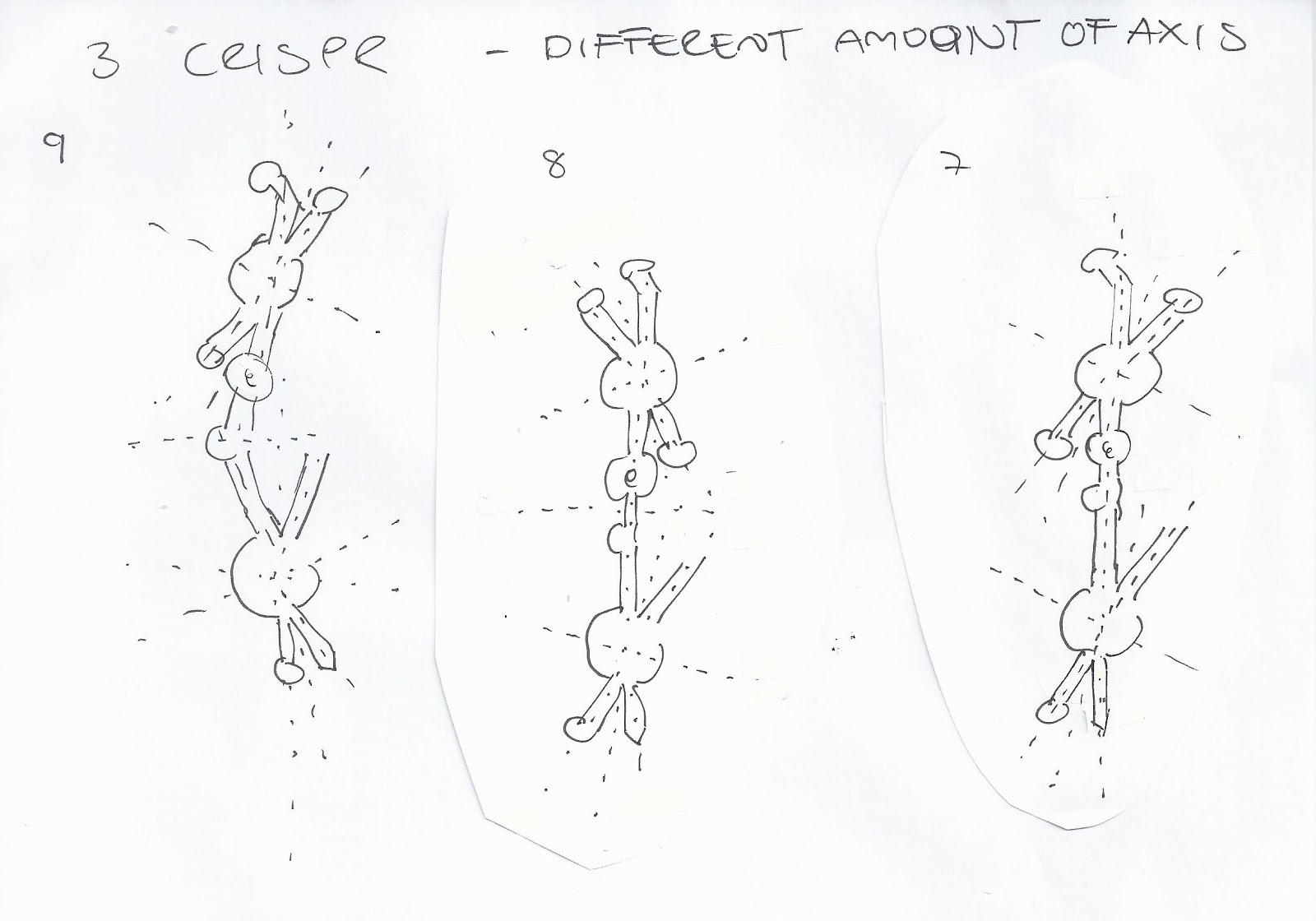
1, 2 and 3 order fractal level
For each level the number of switching stems double
Middle folding line for turnoff
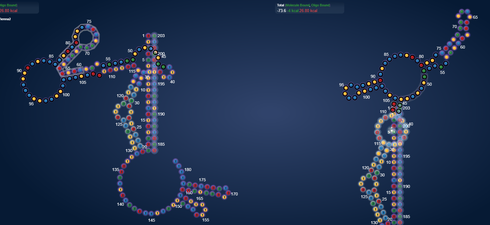
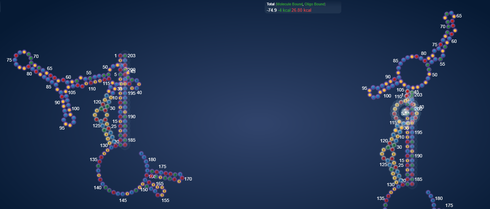
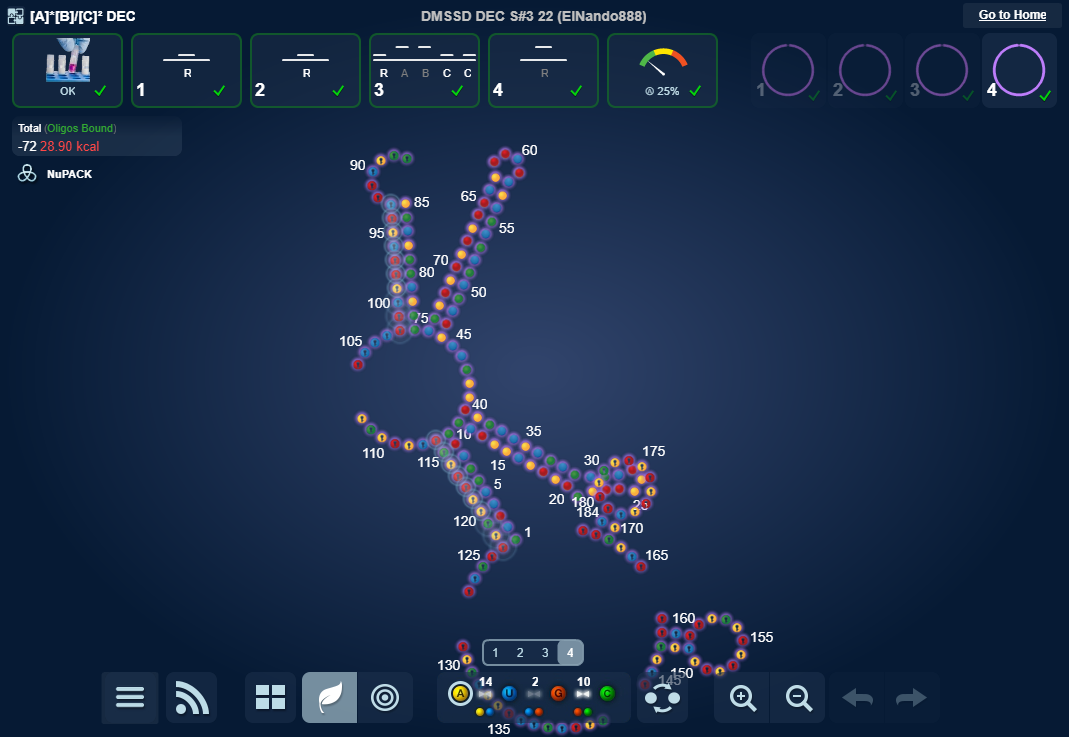
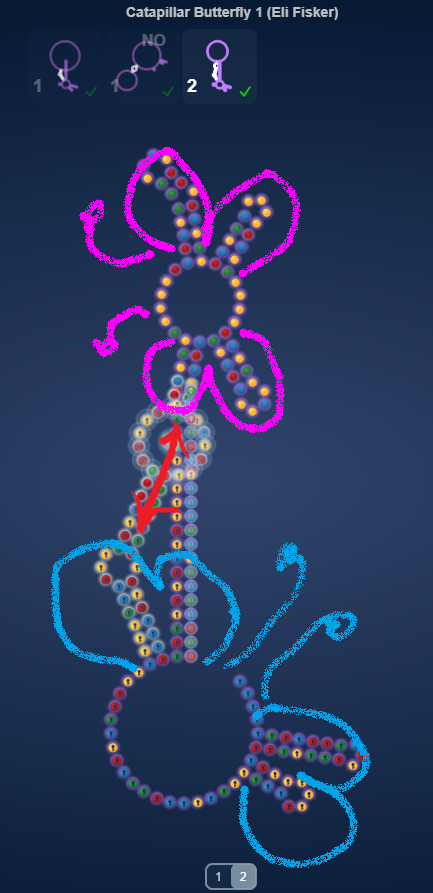
Puzzle demonstration of second and forth order level
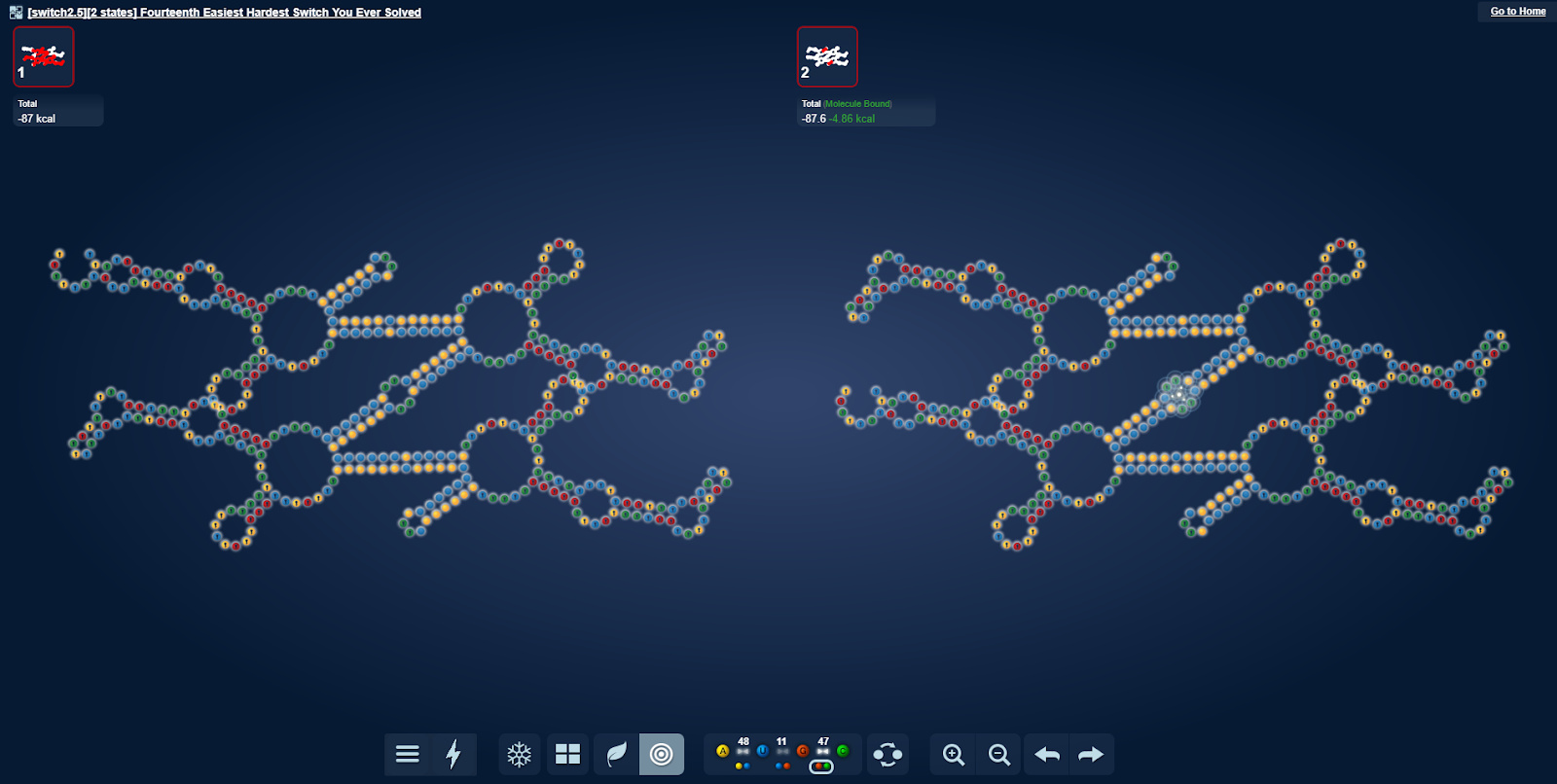
Cynwulf has made a big puzzle that does the movement I kind of imagine for the double Butterfly image. With two halfs of the puzzle meeting in the other state.
http://www.eternagame.org/web/puzzle/8050573/
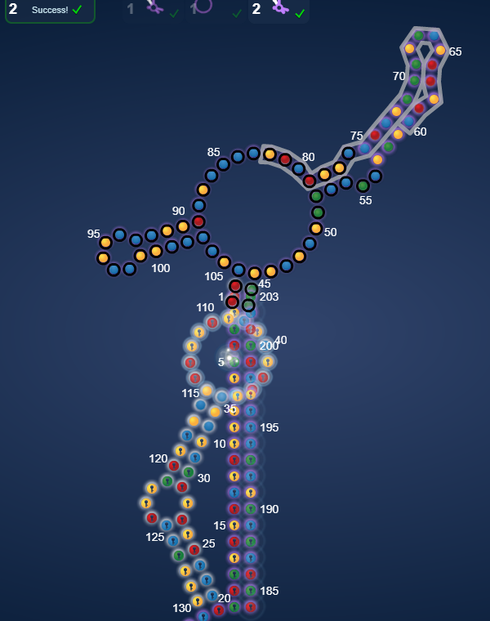
Plus while looking for the puzzle I realized he has already made proof of concept for level 4 for this butterfly pattern. I’m aware this is simulation and this is not lab. But this is impressive.
Notice that the motif itself is coaxial to the next motive.
http://www.eternagame.org/web/puzzle/7933818/
While the puzzle switch, there isn’t much structure change. There are only 14 switching stems in the main middle part of the puzzle and not the 16 I would have expected. This is due to the motifs sharing coaxial stackings.